Research Engineer
VIRTKOM · Part-time · Remote (Atlanta, USA)
Research on large-scale LLM pre-training infrastructure for heterogeneous, distributed compute. Focus on deep learning and distributed systems.
I make AI work in the real world, on slow internet, small devices and all 22 Indian languages, and I share all my code and data.
I am an Electronics & Communication engineering student at IIT Guwahati who builds and measures machine learning systems under real constraints. My work spans tokenizer efficiency for Indian languages, low-communication training over bad networks, IoT protocol benchmarking and on-device ML for products I build.
Currently measuring, verifying and publishing.
Research on large-scale LLM pre-training infrastructure for heterogeneous, distributed compute. Focus on deep learning and distributed systems.
Building NaturaLens, a mobile app that identifies wildlife from a photo and keeps a log of what you have found. React Native app, Next.js web and a species database built from GBIF and IUCN data.
Added Indian-script coverage, covering all 22 scheduled languages, to TensorFold's tokenizer parity suite, verified against 8 major LLM tokenizers. PR #1988 ↗ (under review)
Worked under Dr. Anirban Dasgupta, Department of Electronics and Electrical Engineering, building research tools in Python and Tkinter.
Coursework in probability and stochastic systems, linear algebra, digital signal processing and information theory.
Published research, with open code and data
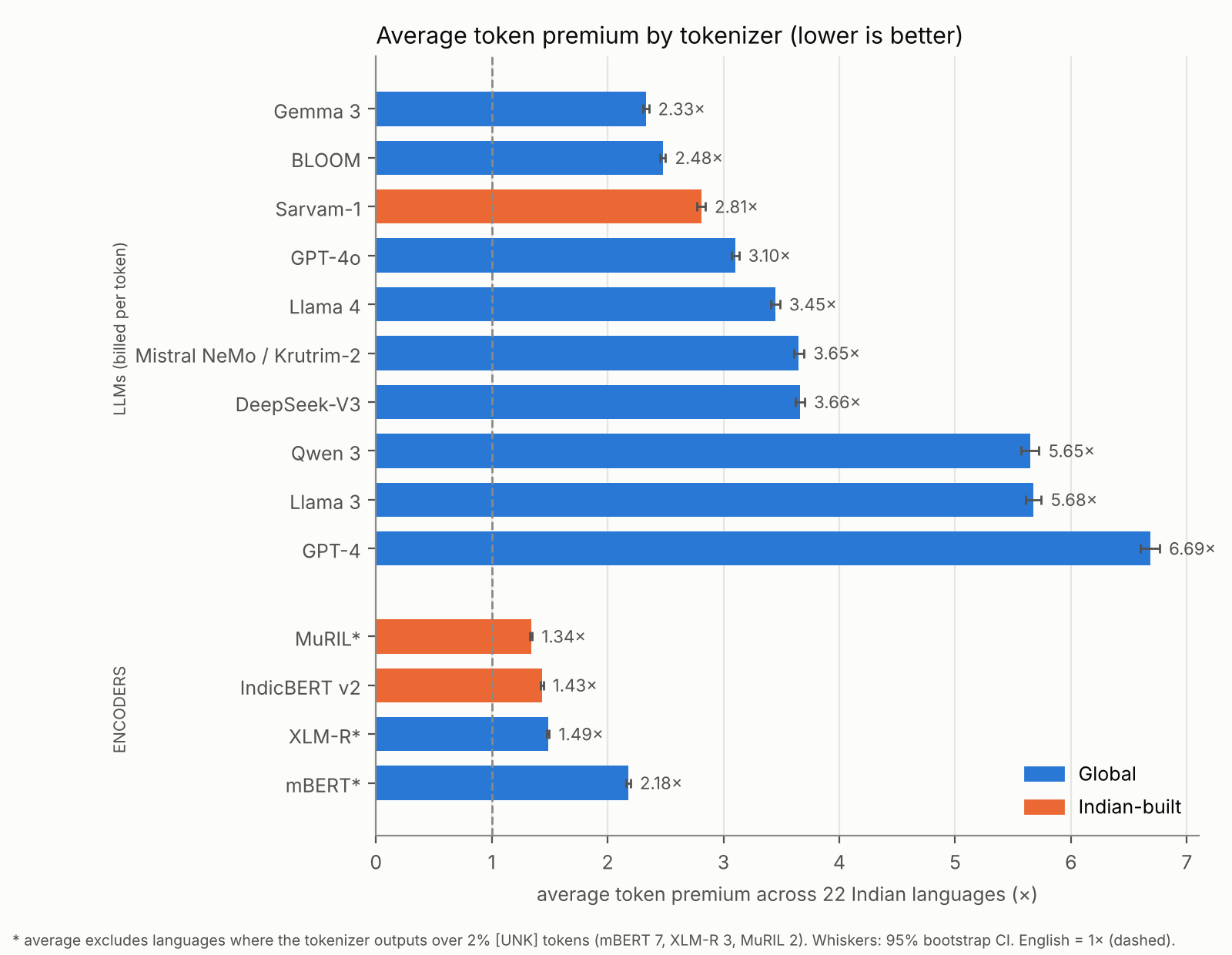
How many more tokens the 22 scheduled Indian languages need than English, measured across 14 tokenizers from GPT-4o and Llama 4 to India's own Sarvam-1.
LLM cost, context length and speed are all counted in tokens, and tokenizers built on English-heavy data split Indian languages into far more of them.
Used professionally translated parallel sentences, verified GPT counts against OpenAI's official tiktoken (catching a 46% library over-count), and excluded tokenizers that silently drop text.
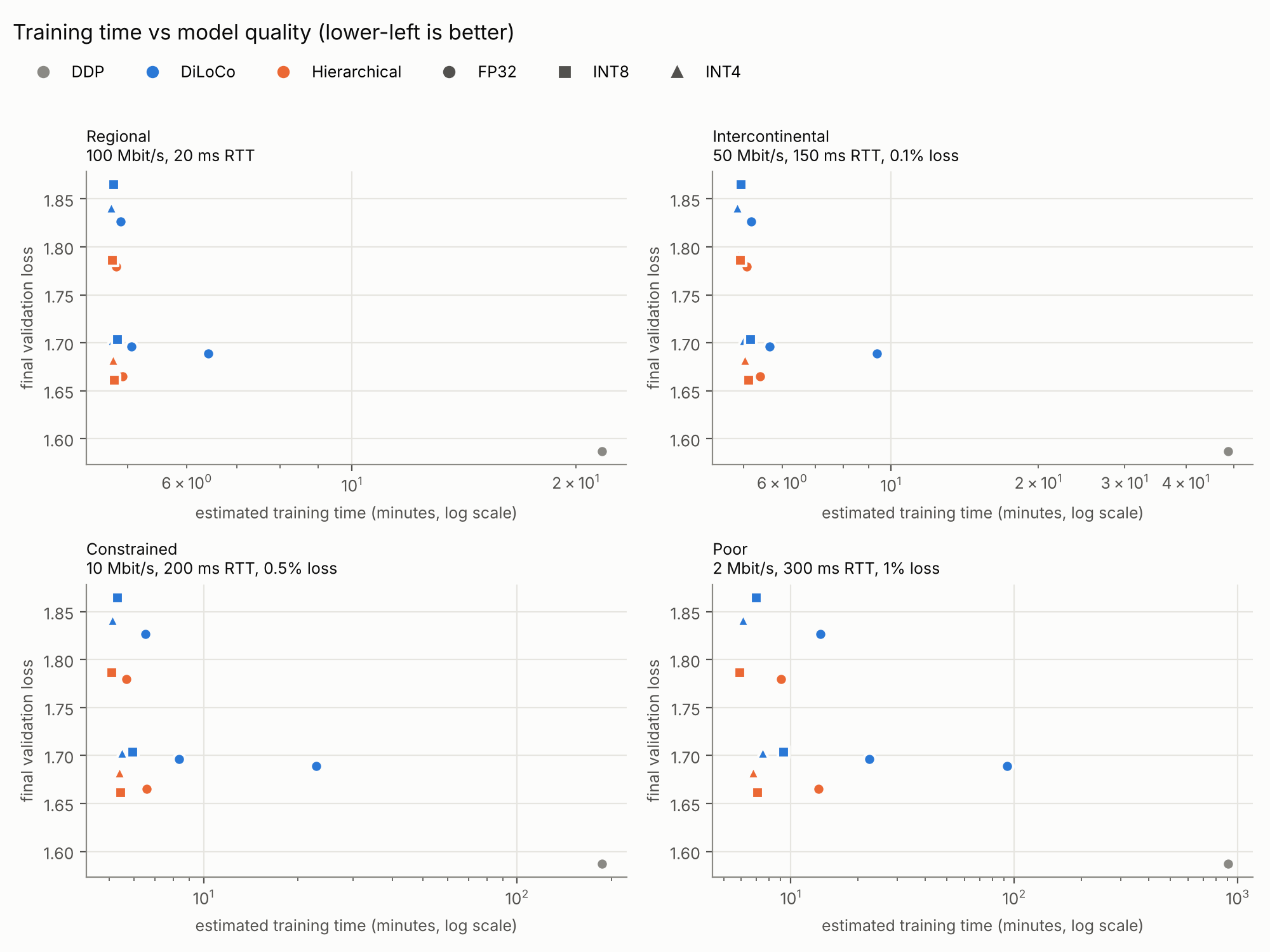
DDP vs DiLoCo vs hierarchical aggregation for training a transformer across emulated regions, measured over real TCP through a packet-level WAN emulator.
Training across distant sites is limited by slow, lossy internet links, and most studies estimate network effects instead of measuring them.
Built an NFQUEUE emulator with per-region full-duplex links and real MTU, found and fixed a TCP Small Queues artefact, tuned every baseline fairly and validated with a real 4-process run.
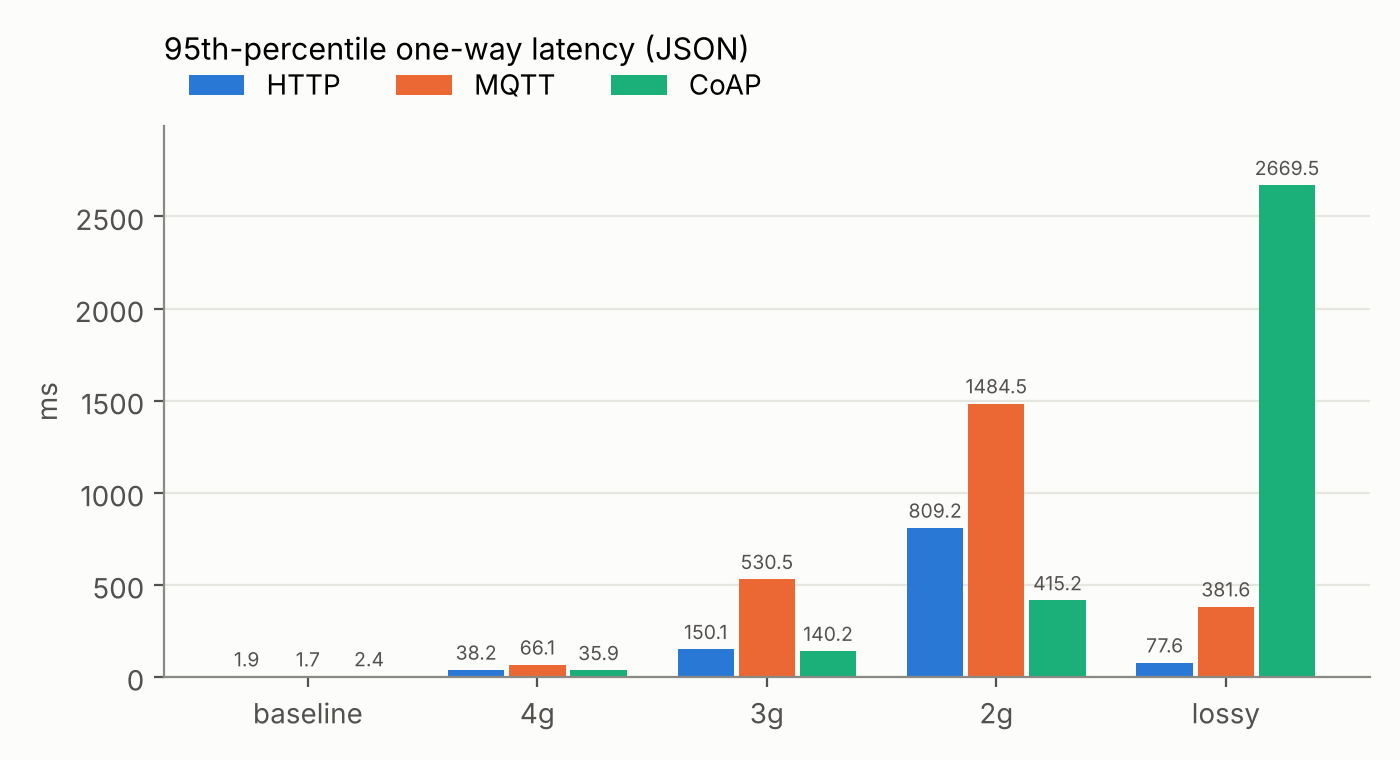
A reproducible benchmark of the three main IoT protocols under emulated 4G, 3G, 2G and lossy links, with JSON and CBOR payloads.
IoT devices often live on patchy cellular links, but protocol comparisons are usually run on clean networks.
Packet captures exposed configuration pitfalls (no keep-alive, Nagle, autocorking) that made HTTP look 4× slower than it is; every contaminated run was repeated.
B.Tech
Electronics & Communication
IIT Guwahati · 2026
Top 2%
IMO
NTSE Scholar
3
Research preprints
Open code & data
Specialist
Codeforces
LeetCode Knight
I like testing AI where it usually breaks: slow internet, small devices and Indian languages. I set up those conditions on my own computer, run every test many times and double-check the numbers before I believe them. When I'm done, I share the code and data so anyone can check my work.
Open to research collaborations, open-source work and ML engineering opportunities.